
Why Your Garage Is So Hot in Phoenix — and How Your Door Affects It
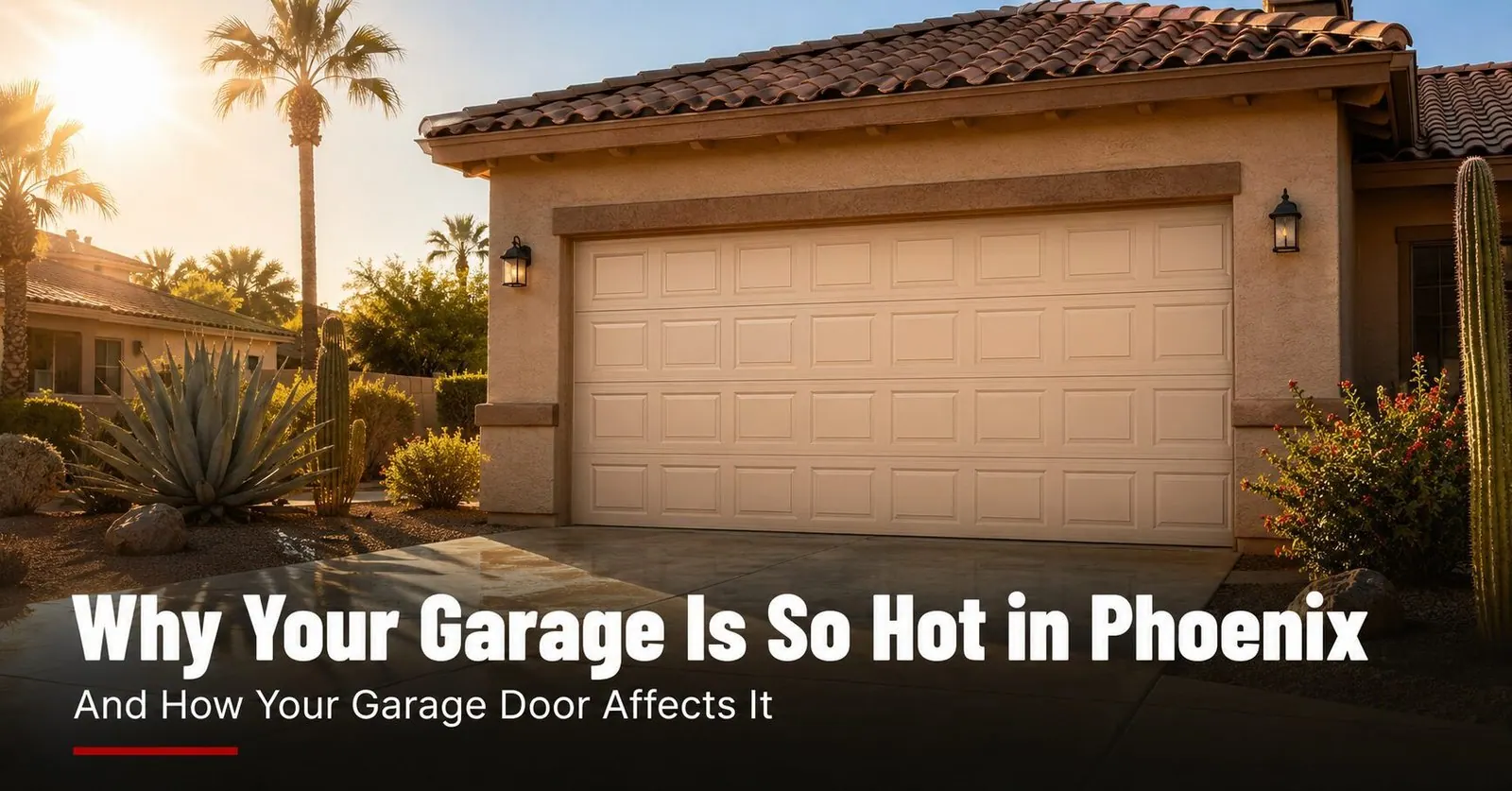
Your Phoenix garage gets so hot because it's a poorly insulated box facing the desert sun, and the garage door is usually the single biggest heat source in the room. On a July afternoon the door's outside surface can pass 150 degrees, and an uninsulated panel conducts that heat straight inside, where the slab and walls store it and radiate it for hours after sundown. The biggest levers you control:
- Door insulation — a polyurethane-insulated door (R-12 to R-18.4) slows the heat coming through the largest surface in your garage.
- Seals — a cracked, sun-baked bottom seal and worn weatherstripping let hot air pour in around the edges.
- Color & sun exposure — dark doors on west- or south-facing garages run hottest and need the most help.
- Ventilation — moving the trapped hot air out keeps it from building up all evening.
The rest of this guide breaks down where the heat actually comes from and the fixes that make the biggest difference here in the East Valley.
If you've ever opened your garage in July and felt a wall of heat roll out, you already know the East Valley does something to a garage that milder climates never test. By mid-afternoon a closed Phoenix garage routinely runs 110 to 130 degrees inside — hot enough that paint cures faster, stored food spoils, and stepping out to grab a tool feels like opening an oven. And it doesn't cool off when the sun goes down; that stored heat keeps radiating well into the night. We get asked about this constantly across Mesa, Gilbert, Chandler, and Queen Creek, usually some version of "is my garage door making this worse?" The honest answer is yes — more than most homeowners realize. This guide explains exactly where the heat comes from, how big a role your door really plays, and the practical, in-order steps that bring a hot garage down without gutting your whole house.
Why a Phoenix Garage Turns Into an Oven
A garage is the one room in the house with almost no defenses against the heat. The living spaces are insulated, conditioned, and shaded by the roof; the garage is typically uninsulated, unconditioned, and fronted by a giant metal door that faces the open driveway. In a place like Phoenix, where the sun is intense from April through September and the UV index is among the highest in the country, that adds up fast.
Solar gain on every surface. The roof, the walls, the slab, and the door all absorb solar energy throughout the day. The garage door and the roof take the worst of it because they catch the most direct sun.
Thermal mass holds the heat. A concrete slab and block or framed walls act like a battery — they soak up heat all afternoon and release it slowly. This is why your garage can still read over 100 degrees at 9 or 10 p.m. long after the air outside has cooled. The heat that came in during the day simply has nowhere to go.
Little to no ventilation. Most garages have no active airflow. Hot air that builds up just sits and stacks, and without a way out it keeps the space warm overnight.
You add your own heat sources. Pulling a car that's been baking on the road into a closed garage adds a surprising amount of heat, as do a water heater, a freezer, or a dryer vented into the space. In a sealed, sun-loaded garage, all of it lingers.
Put those together and the garage becomes the hottest room in the house. The good news: of all those surfaces, the garage door is both the biggest contributor and the one easiest to do something about.
How Much Heat Your Garage Door Is Responsible For
Your garage door is one of the largest single surfaces on the entire house, and on most Arizona homes it's also one of the least insulated. That combination makes it the heat-gain leader in the room. Here's the chain of events on a typical summer afternoon:
The outside skin of the door, sitting in direct sun, can climb past 150 degrees. An uninsulated single-skin steel door — one layer of metal with nothing behind it — conducts that heat straight to its inside surface, which then radiates into the garage like a panel heater that runs all afternoon. It's essentially a giant frying pan bolted to the front of your house.
On an attached garage, the story doesn't stop at the garage. The heat that builds up in the space pushes through the wall the garage shares with your living area, warming the bedroom or living room on the other side and making your AC work harder right when it's already straining. So the right door doesn't just make the garage more usable — it can take a real load off the cooled rooms next to it.
This is why, when homeowners ask us how to fix a brutally hot garage, the door is the first place we look. You can't easily re-insulate a slab or re-roof a garage on a whim, but you can absolutely change what's happening at the largest, sunniest surface in the room.
The 5 Things That Decide How Hot Your Garage Gets
Two identical-looking garages on the same Mesa street can run very different temperatures. These five factors are why — and four of the five involve the door.
Whether the door is insulated
This is the big one. An uninsulated R-0 single-skin door conducts heat freely; a polyurethane-insulated door in the R-12 to R-18.4 range slows it dramatically. Polyurethane is injected as a liquid that expands and bonds to both steel skins, forming one rigid panel with no air gaps — both the best insulator and the most heat-stable construction. A polystyrene foam-board door (about R-6 to R-9) is a meaningful step up from nothing but doesn't perform like polyurethane.
The condition of the seals
Even a good door leaks heat if the gaskets have failed. Arizona sun bakes the bottom seal and the weatherstripping until they crack, shrink, and pull away, leaving gaps along the bottom and sides where superheated outside air pours straight in. Seals are the cheapest high-impact fix on this list, and the first thing we check on a hot-garage call.
Color and sun exposure
A west- or south-facing door takes hours of direct afternoon sun; a north-facing one barely sees it. Color stacks on top of that — a dark or black finish can run roughly 20 to 30 degrees hotter than a cream or white door in the same exposure. A dark, uninsulated door on a west-facing attached garage is the worst-case combination we see.
Attic and roof heat above the garage
Heat doesn't only come through the door. The roof and the attic space above the garage can hit 140 degrees or more and radiate down into the room. This is the one major factor the door can't fix — it's where attic ventilation and roof-deck radiant barriers come in.
Ventilation and airflow
A garage with no way to move air traps everything that gets in. Adding an attic or gable fan, a powered vent, or even cross-airflow lets the heat that does get inside escape faster instead of building up and radiating all evening. Ventilation works best paired with an insulated, well-sealed door — less heat in, and what does get in leaves faster.
How to Actually Cool a Hot Garage (In Order)
You don't have to do everything at once. Work down this list — it's ordered by how much temperature drop you get for the effort and cost involved.
1. Replace failed seals first
If your bottom seal is cracked or your weatherstripping has pulled away, start here. It's the lowest-effort, highest-return fix on the list, and it stops hot air from bypassing whatever insulation you already have. A fresh bottom seal and side stops also keep out the dust and monsoon water that are their own Arizona headaches. Our weather-stripping and bottom seal service handles exactly this.
2. Upgrade to (or add) insulation on the door
If your door is a bare single-skin panel, this is the single biggest improvement you can make. A factory polyurethane-insulated door performs best and seals tightest, and if you're already considering a new door for looks or age, choosing an insulated model is a straightforward win. A DIY foam or batt insulation kit is a lower-cost middle path for a sound existing door, though it won't match a factory-insulated panel. Our new door installation options walk through the insulated choices that fit Arizona homes.
3. Add or improve ventilation
Once you've cut the heat coming in, help the rest escape. An attic or gable fan above the garage, a powered roof vent, or a simple high-and-low airflow setup all move trapped hot air out. This matters most if you use the garage as a workshop, gym, or office where comfort counts.
4. Change your habits during peak sun
Free and effective: keep the door closed during the hottest part of the day so you're not inviting the afternoon in. Let a hot car cool in the driveway before pulling it into a closed garage. Move heat-generating appliances or vent them outside where you can. None of these are big projects, and together they take the edge off.
5. Address the roof and attic if heat persists
If the garage still bakes after the door and ventilation are handled, the heat is likely pouring in from above. Attic insulation, a radiant barrier, or added roof ventilation are the next step. That's outside our lane — but knowing the door isn't the remaining culprit saves you from chasing the wrong fix.
Cooling Tactics, Ranked by Impact
Here's how the common fixes stack up on cost, effort, and how much of a difference they make in an Arizona garage.
| Fix | Relative cost | Effort | Heat impact in AZ |
|---|---|---|---|
| Replace failed seals | Low | Quick service visit | High — stops air pouring in around the door |
| Polyurethane-insulated door | Higher (new door) | Professional install | Highest — fixes the biggest heat surface |
| DIY insulation kit | Low to moderate | A weekend project | Moderate — helps, but below factory-insulated |
| Attic / gable ventilation | Moderate | Installed by a pro | Moderate to high — clears trapped heat |
| Habits (close door, cool cars outside) | Free | None | Low to moderate — takes the edge off |
When It's Worth Calling a Pro
Plenty of the heat fixes above are do-it-yourself friendly. A few are worth a professional set of eyes, especially when the heat is also starting to affect how the door runs:
- Your seals are cracked, gapped, or letting in light, dust, or water. A clean, properly fitted seal is the fastest heat win and a quick visit.
- You're considering a new door anyway. If the door is aging, dented, or builder-grade single-skin, an insulated replacement solves looks, age, and heat in one move.
- The door is getting noisy, slow, or balky in the heat. High temperatures thin out lubricant and stress springs and openers — a tune-up before peak summer heads off a breakdown.
- You're not sure where the heat is coming from. We can walk the garage and tell you honestly whether the door, the seals, or the roof above is the real driver, so you don't spend on the wrong fix.
We work across the East Valley and Phoenix metro, and same-day service is our standard, often within hours of your call.
Why East Valley Homeowners Call Farnsworth About Hot Garages
Farnsworth Garage Door Service was founded by brothers Brigham and Riley Farnsworth. The Farnsworth name has 60+ years of family business across the East Valley behind it — R&K, Farnsworth Wholesale, Farnsworth Realty — and we run this company the way our family has always run a business: tell the truth, put the price in writing, do the work right the first time.
- We diagnose the real heat source. Door, seals, or roof — we tell you straight, so you don't spend on a fix that won't move the thermometer.
- We quote insulated door options in writing. You see exactly what each option costs for your specific size, elevation, and sun exposure before you decide.
- Seals and weatherstripping done right. The cheapest high-impact heat fix, fitted to actually seal in our dust and monsoon conditions.
- We know Arizona doors. Every recommendation is built around desert sun, UV, and the way attached garages share heat with your living space.
- Same-day service is our standard, often within hours of your call.
- 5.0 stars on Google. Our neighbors keep us busy by telling theirs.
Ready to take the heat out of your garage? See our new door installation options, learn about preventative maintenance, or book an appointment today.
Frequently Asked Questions
How hot does a garage get in Phoenix?
On a typical Phoenix summer afternoon, an uninsulated or poorly sealed garage commonly runs 15 to 30 degrees hotter than the outside air, which means interior garage temperatures of 110 to 130 degrees are normal from June through September. The west-facing surface of the garage door itself can climb past 150 degrees in direct mid-afternoon sun. The garage doesn't just get hot during the day, either — all that absorbed heat radiates back out for hours after sundown, so the space stays warm well into the evening. How extreme it gets depends on the door's insulation, its color and sun exposure, the condition of the seals, and how much heat the roof and attic dump into the space.
Does my garage door really make my garage hotter?
Yes — the garage door is usually the single largest heat-gaining surface in the room. It's a big, mostly uninsulated panel that faces the driveway and often the afternoon sun, so it both absorbs solar heat and conducts it straight inside. An uninsulated single-skin steel door behaves like a giant frying pan bolted to your house: the outside hits 150 degrees and the inside surface radiates that heat into the garage all afternoon. Swapping to a polyurethane-insulated door, or adding good seals to cut the gaps around a sound door, is one of the most effective things you can do to bring a hot Phoenix garage down.
Will an insulated garage door actually cool down my garage in Arizona?
It won't turn your garage into a refrigerator, but it makes a real, noticeable difference here — more than in almost any other U.S. climate. A polyurethane-insulated door in the R-12 to R-18.4 range slows how fast outside heat passes through the panel, so the garage warms up slower, peaks lower, and on an attached garage sends less heat into the shared wall and the cooled room behind it. Homeowners who upgrade from a bare builder-grade door routinely report a cooler garage and a more comfortable adjoining room. The catch is that insulation only does its full job when the seals around the door are intact, so we look at both together.
Why is my garage so hot even at night in Phoenix?
Because the garage stores heat all day and releases it slowly. The concrete slab, the walls, the roof structure, and an uninsulated door all soak up solar energy through the afternoon, then radiate it back into the space for hours after the sun goes down. This thermal mass effect is why a Phoenix garage can still read over 100 degrees at 9 or 10 p.m. Insulating the door and improving ventilation both help the space shed that stored heat faster overnight instead of holding it like a battery.
Does a dark or black garage door make the garage hotter?
It can. A dark finish absorbs more solar heat than a light one, so a black or deep-bronze door surface can run roughly 20 to 30 degrees hotter than a cream or white door in the same exposure. That doesn't rule out a dark door — they're one of the most popular looks in the East Valley right now — but on a west- or south-facing garage it should be built to handle the heat: a polyurethane-insulated steel panel, a quality UV-rated factory finish, and good seals. A dark, uninsulated door on a hot west-facing elevation is the combination that makes a garage miserable.
What's the cheapest way to make my Phoenix garage cooler?
Start with the seals. A cracked, sun-baked bottom seal and worn weatherstripping let hot outside air pour in around the edges of the door, and replacing them is far less involved than a new door. After that, keeping the door closed during peak sun, parking hot cars outside until they cool, adding attic ventilation, and using a fan to move air all help at low cost. If your door is uninsulated, a do-it-yourself insulation kit is an option, though a factory polyurethane-insulated door performs better and seals tighter. We can walk your garage and tell you which of these will give you the biggest drop for your situation.
Is it bad for my garage door to run in extreme heat?
Extreme heat is hard on the whole system, not just the panel. High temperatures thin out the lubricant on the springs and rollers, soften and crack the seals, and can cause some openers to behave erratically or trip their overload protection. Thin uninsulated panels also flex and oil-can under the daily heat-and-cool cycle. None of this means you should stop using the door, but it's why summer is the season we see the most heat-related service calls in the Phoenix area, and why a quick seasonal tune-up before the worst of the heat pays off.
Should I add ventilation or just insulate the garage door?
They solve different parts of the problem, and the best results usually come from doing both. Insulating the door (and the seals) reduces how much heat gets in. Ventilation — an attic or gable fan, a powered vent, or even just cross-airflow — helps the heat that does get in escape faster so it doesn't build up and radiate all evening. If you only do one thing, address the door and its seals first, since that's the biggest single heat source. Then add ventilation if the space still holds heat, especially if you use the garage as a workshop, gym, or office.

Tired of a Garage That Bakes All Summer?
Licensed, insured, locally owned. We'll diagnose the real heat source — door, seals, or both — and quote insulated door and weatherstripping options in writing, so you know exactly what each fix costs before you decide. Same-day service is our standard, often within hours of your call.