
Garage Door Closes Then Opens Right Back Up: Fixes to Try
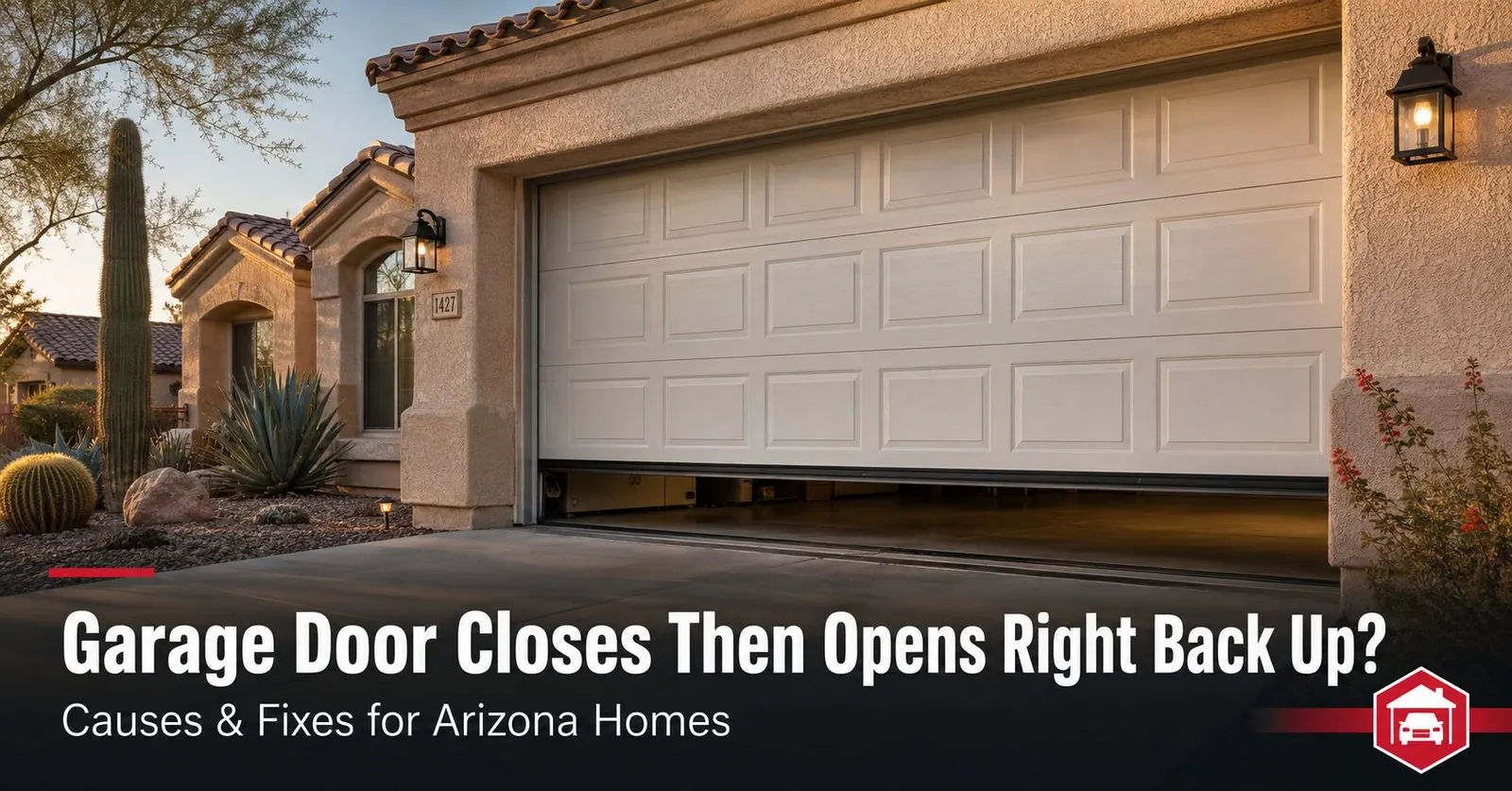
If your garage door travels all the way down, touches the floor, and then immediately reverses back open, the opener's safety system thinks it hit an obstruction at the bottom. The usual culprits are:
- A down-travel limit set too far — the opener keeps pushing after the door is already down.
- A down-force setting that's too sensitive, so the door simply seating trips the reverse.
- Debris or a dust ridge across the threshold that the door bumps.
- A bottom seal that swelled or cracked in the heat, so the door meets the floor unevenly.
- A roller or track binding in the last foot of travel.
It's usually not the photo-eye sensors — those make a door reverse before it reaches the floor, not after. Start by clearing the threshold and checking the seal; if it still reverses, the limit and force settings (and your safety reverse) are best set by a technician.
It's one of the more maddening garage door problems: you press the button, the door glides down, the bottom seal kisses the floor for half a second — and then it heads right back up like it changed its mind. Try again, same thing. The door simply won't stay closed, and now you're standing in the driveway wondering whether you have to babysit it shut every night.
Here's the reassuring part. This exact symptom — closes, touches down, reopens — points to a short, specific list of causes, and a couple of them you can check in five minutes without any tools. The key is that your door is making it to the floor. That single detail rules out the cause most people assume first, and steers you straight to the real problem. We run these calls across the East Valley constantly, so let's walk through what your door is actually telling you.
First: Which Kind of Reversal Is It?
This is the most useful thing you can notice, and it splits the whole problem in half. Watch your door close one time and ask: does it reverse before it touches the floor, or after?
- Reverses partway down — before the seal meets the floor. That's almost always the photo-eye safety sensors near the bottom of the tracks: a blocked beam, a sensor knocked out of alignment, a dusty lens, or low afternoon sun hitting the receiving eye. The door never gets a chance to seat.
- Reaches the floor, touches down, then reopens. That's a contact reversal. The door closed fully, the opener felt resistance at the very bottom, and it backed off. The beam was clear the whole way — so the sensors did their job, and the problem is somewhere in the door's down-stop: the limit, the force, the threshold, the seal, or a binding roller.
Because your door is making it all the way down before it reopens, you're in the second group. That's good news: it means you can skip the sensor rabbit hole most homeowners fall into and focus on the handful of causes below. (A quick sensor glance is still worth it — more on that in a moment — but it's rarely the answer when the door fully seats first.)
How the Opener Decides to Reverse at the Floor
Two minutes on the mechanics makes every cause below obvious. Your opener has two settings that govern the bottom of travel:
- The down-limit tells the opener exactly how far to run the door before it should stop — ideally the instant the door is firmly closed against the floor.
- The down-force is how much resistance the opener will push through before it decides "I've hit something" and reverses for safety.
When those two are dialed in, the door seats softly, the opener stops, and everyone's happy. The reversing starts when the door meets more resistance than the opener expects right at the bottom — whether that resistance is real (debris, a swollen seal, a binding roller) or manufactured by a limit that's set too far, so the opener keeps shoving after the door is already down. Either way, the opener reads it as an obstruction and does the one thing it's designed to do: send the door back up so it never crushes whatever might be underneath. That safety reverse is a feature, not a bug — which is why the goal is to fix the cause, not silence the reaction.
7 Reasons a Garage Door Closes Then Opens Right Back Up
Nearly every "closes then reopens" call traces back to one of these. They're roughly ordered from most to least common.
1. The down-limit is set too far (the most common cause)
If the opener is told to run the door past the point where it's already closed, it keeps driving after the door has seated on the floor. The door has nowhere left to go, the opener feels that hard stop as an obstruction, and it reverses. You'll often hear a little extra push or a thump right as the door bottoms out, then up it goes.
2. The down-force is set too sensitive
The normal, gentle resistance of the door seating and the bottom seal compressing can be enough to trip a down-force that's set too low. The door closes, the seal squishes, the opener overreacts to that tiny push-back, and it reverses. This often shows up alongside a brand-new seal or after a temperature swing changes how the door sits.
3. Something's on the threshold
The simplest cause and the easiest to miss. A pebble, a stray extension cord, a dried clump of mud, a leaf pile, or a ridge of blown desert dust right where the door meets the concrete gives the door a genuine obstruction to bump. The opener does exactly what it should and reverses.
4. The bottom seal swelled, cracked, or balled up
The rubber bottom seal (the astragal that runs along the base of the door) is supposed to compress smoothly against the floor. Arizona heat is brutal on it — it swells, hardens, splits, or bunches up in its retainer until the door meets the floor early or unevenly. The opener feels that as resistance and reverses. A floor that slopes or dips can cause the same thing on one side.
5. A roller or track is binding near the bottom
If a worn roller drags, or a track section is packed with hardened old grease and dust, the door can bind in its last foot of travel. The opener pushes into that drag, reads it as hitting something, and reverses. You'll sometimes hear a scrape or a catch at the same point every time the door nears the floor.
6. The door is heavy or out of balance
Your opener expects the springs to carry most of the door's weight. If a spring is weak, worn, or one of two has broken, the door gets heavy and the opener's force readings go haywire — sometimes reversing because the effort at the bottom doesn't match what it expects. A door that also feels heavy when you lift it by hand is pointing here.
7. A sensor dropping the beam at the last second
This is the exception to the "it's not the sensors" rule. A photo-eye that's only marginally aligned, or one catching low afternoon sun, can hold the beam most of the way down and then lose it right at the end — making the door reverse just as it seats. It mimics a contact reversal but starts at the sensor.
What You're Noticing — and What It Means
The little details of how your door behaves usually narrow the cause down fast. Match what you're seeing or hearing to the most likely culprit and whether it's safe to tackle yourself.
| What you're noticing | Most likely cause | Safe to DIY? |
|---|---|---|
| Extra push or thump as the door bottoms out, then reverses | Down-limit set too far | No — needs limit set + reverse test |
| Door touches lightly and reopens; seal looks new or weather just changed | Down-force too sensitive | No — safety setting; tech adjusts |
| Reverses only sometimes; visible debris near the floor | Obstruction on the threshold | Yes — clear it and retry |
| Seal looks swollen, cracked, or bunched up | Worn/swollen bottom seal | Inspect yourself; seal swap is a quick service |
| Scrape or catch at the same low spot every time | Binding roller or track | Inspect with opener off; repair is a call |
| Door feels heavy by hand; won't hold position | Weak/broken spring, out of balance | No — counterbalance work; call a tech |
| A sensor LED blinks or flickers as the door nears the floor | Sensor dropping beam at the end | Clean lenses; realignment may be needed |
What You Can Safely Check Right Now
Work through these in order. The first three are quick, tool-free, and fix a real share of these calls on their own.
- Clear the threshold. Sweep the full width where the door meets the concrete. Look for pebbles, cords, leaves, dried mud, or a ridge of dust. Run the door — if it stays closed, you found it.
- Inspect the bottom seal. Walk the length of the rubber seal. Swollen, cracked, brittle, or bunched up in its retainer? That's a strong lead, and a fresh seal is a small fix.
- Watch both sensor LEDs as it closes. Stand to the side and watch the little lights on the photo-eyes near the floor. Solid the whole way down = sensors are fine. A blink or flicker near the bottom = clean the lenses and check alignment.
- Test the door's balance. With the door fully closed, pull the manual release cord, then lift the door by hand to about waist height and let go. A healthy door stays put. If it's heavy to lift or drops/slams, the springs need attention — re-engage the opener and leave that to a tech.
- Look (don't force) for binding. With the opener disconnected, move the door slowly through its last foot of travel by hand and feel for a catch or scrape. Note where it sticks. Clear loose debris from the lower track; leave bent track or worn rollers to a technician.
- Leave the limit and force screws alone — or test the reverse if you touch them. If you've adjusted anything on the opener, you must confirm the safety reverse still works (next section). If you're not comfortable doing that, that's the point to call us.
When to Stop and Call a Tech
Plenty of these you can knock out yourself — a swept threshold and a fresh seal solve a real share of them. Reach out when:
- The door still reverses after the threshold is clean and both sensor LEDs glow solid.
- The door feels heavy by hand or won't hold its position — that's a spring or balance issue, not an opener setting.
- A roller or track is clearly binding, bent, or packed with hardened grease and dust.
- You'd be adjusting the down-limit or down-force and aren't set up to verify the safety reverse afterward.
A technician can set the limit and force correctly, confirm the safety reverse with a board test, and clear up any binding or seal problem in a single visit — so the door closes firmly and still backs off the instant it should. When you're ready, book a visit online or call us, and explore our full repair services or our opener motor service if the trouble is in the unit itself.
Why East Valley Homeowners Call Farnsworth When the Door Won't Stay Shut
Farnsworth Garage Door Service was founded by brothers Brigham and Riley Farnsworth. The Farnsworth name carries 60+ years of business behind it across the East Valley — R&K, Farnsworth Wholesale, Farnsworth Realty — and we run this company the same way our family always has: find out what's actually wrong first, put the price in writing, then do the work right.
- We diagnose before we sell. A reversing door can be a free threshold sweep or a limit-and-force reset — we tell you which before quoting a dollar.
- Seals, rollers, sensors, and springs on the truck. Most "closes then reopens" causes get fixed in one visit, not two.
- We always verify the safety reverse before we leave — your door should close firmly and still protect whatever's underneath it.
- Same-day service is our standard, often within hours of your call.
- 5.0 stars on Google. Our neighbors trust us — and tell their neighbors.
Door reversing, a tired bottom seal, or a unit that needs a look? Explore our full repair services, our tune-up page, or see where we work across the East Valley.
Frequently Asked Questions
Why does my garage door close then open right back up?
If your door makes it all the way to the floor and then immediately reverses, the opener's safety system thinks it hit something at the bottom. The most common causes are a down-travel limit set too far (the opener keeps pushing after the door is already down and reads the floor as an obstruction), a down-force setting that's too sensitive, debris or a dust ridge across the threshold, a bottom rubber seal that has swollen or cracked in the heat, or a roller or track binding in the last foot of travel. It's usually not the photo-eye sensors — those make a door reverse before it reaches the floor, not after.
What's the difference between a door that reverses before it touches the floor and one that reverses after?
It's the single most useful thing to notice. A door that reverses partway down — before the bottom seal ever meets the floor — is almost always a photo-eye safety sensor problem: a blocked beam, a misaligned sensor, a dirty lens, or afternoon sun hitting the receiving eye. A door that makes it all the way down, touches the floor, and then reverses is a contact-reversal problem: the opener felt resistance at the bottom and backed off. That points to the down-limit, the down-force, something under the door, a swollen seal, or a binding roller. Knowing which one your door does narrows the list of causes in half before anyone touches a screwdriver.
If my door reaches the floor and reopens, is it still the safety sensors?
Usually not. The photo-eye sensors near the floor watch the beam across the opening; when something breaks that beam, the door reverses on its way down — before it seats. If your door travels all the way to the floor and only then reverses, the beam stayed clear the whole way, so the sensors did their job. The reversal is coming from the opener sensing physical resistance at the bottom. That said, a sensor that is marginally aligned can drop the beam right at the end of travel, especially with vibration or low sun, so it's worth a glance to confirm both sensor LEDs glow solid (not blinking). If they're solid, look to the down-limit, down-force, threshold, and rollers instead.
Can I adjust the down-limit or force settings on my opener myself?
You can locate them — most openers have small down-limit and down-force adjustment dials or buttons on the back or side of the motor head, labeled in the manual. But these settings control your door's automatic safety reverse, the feature that stops the door from crushing a person, pet, or car. Set the force too high to stop the reversing and you defeat that protection. If you make any adjustment, you must re-test the safety reverse afterward by laying a flat board or a 2x4 lying flat on the floor in the door's path — the door should touch it and reverse immediately. If it doesn't, the setting is unsafe. Because this is a safety system, most homeowners are better off having a technician dial in the limit and force and verify the reverse, rather than chasing the symptom and accidentally disabling the protection.
Why does my garage door reverse at the floor more in the Arizona summer?
Heat and dust both work against the bottom of the door. Arizona sun bakes the rubber bottom seal until it swells, hardens, or cracks, so the door meets the floor unevenly and the opener reads that as hitting something. The same heat turns old track and roller grease into a sticky varnish that makes the door drag and bind in its last foot of travel, which also trips the reversal. Blown dust and monsoon debris pile into low ridges right at the threshold, giving the door a real obstruction to bump. And snowbird doors that sat unused all summer come back with a hardened seal and a dust-packed track, so this is one of the more common calls we run as the season turns over.
Could a worn or swollen bottom seal make my door reverse?
Yes, and it's an underrated cause here. The bottom seal (the rubber astragal in the track along the bottom of the door) is supposed to compress smoothly against the floor. When it swells in the heat, hardens, cracks, or balls up in its retainer, the door can meet the floor early or unevenly, and the opener feels that as resistance and reverses. A floor that slopes or has a dip can do the same thing on one side. Replacing a tired bottom seal is an inexpensive fix, and in our climate it's wear-and-tear maintenance more than a repair. If your door reverses and the seal looks brittle, cracked, or puffed up, that's a strong lead.
When should I stop trying and call a technician?
Clearing the threshold, wiping the sensor lenses, and checking the bottom seal are all fine to do yourself. Stop and call a pro if the door still reverses after the threshold is clean and both sensor LEDs are solid, if the door feels heavy or slams when you test it by hand (a spring or balance problem), if a roller or track is clearly binding, or if you're tempted to turn up the down-force to make the reversing stop — that last one trades a nuisance for a disabled safety feature. A technician can set the limit and force correctly, verify the safety reverse with a board test, and fix any binding or seal issue in one visit, so the door closes firmly and still protects whatever is underneath it.

Door Won't Stay Closed? Let's Get It Sealing Right.
Licensed, insured, locally owned. We diagnose limits, force, seals, rollers, and springs on-site, verify the safety reverse, and quote in writing before any work starts. Same-day service across the East Valley.