
Gold Canyon Custom Homes: Choosing a Garage Door That Holds Up in the Superstition Foothills
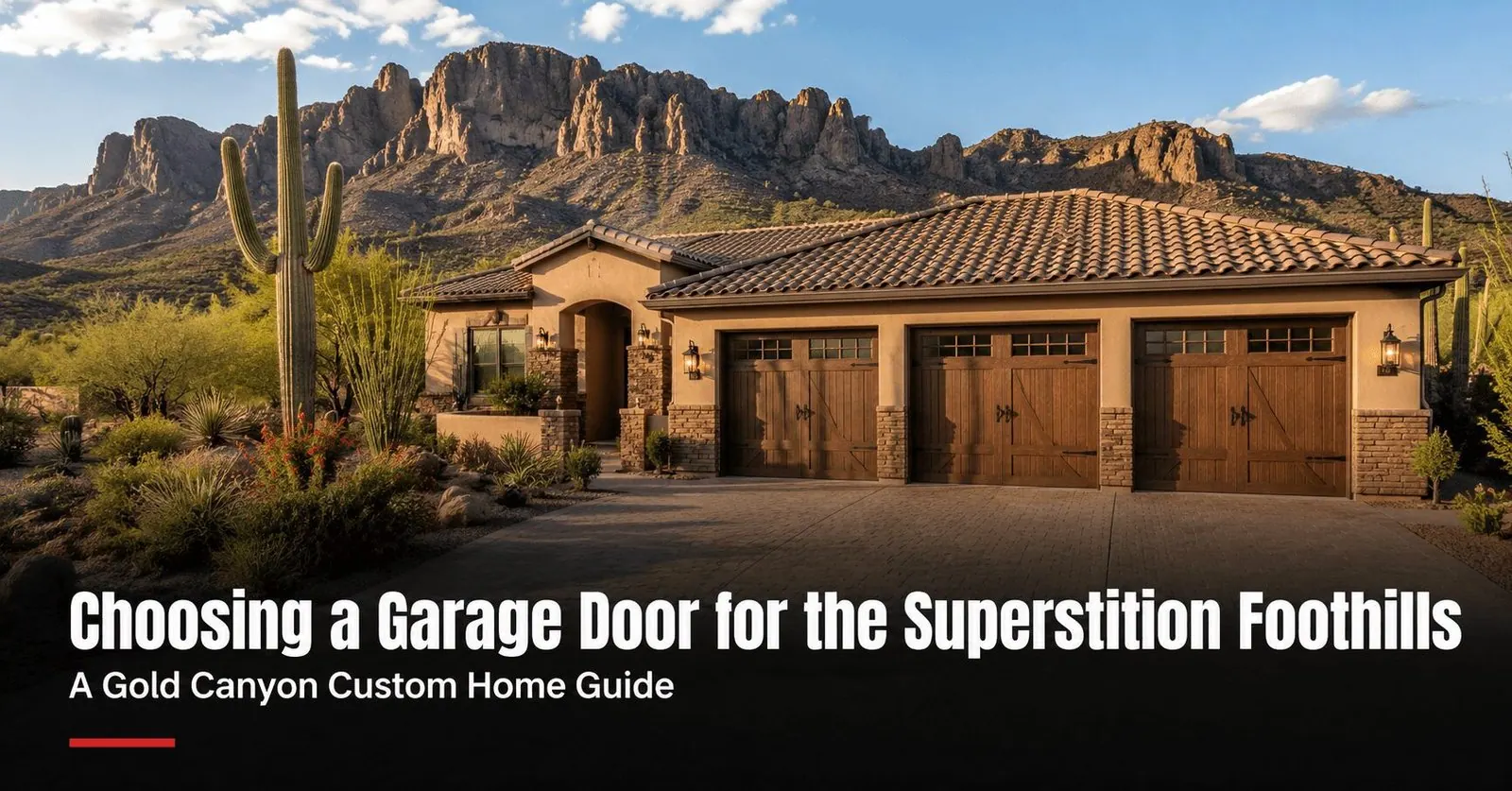
Gold Canyon homes don't look like the rest of the East Valley, and they don't get treated like the rest of the East Valley either. Out here against the Superstition foothills, the lots are bigger, the architecture is more custom, and the garage door is often the single largest thing you see from the street — sometimes a wide three-car face, sometimes a tall RV door, almost always a real design decision rather than a builder default.
That makes choosing the right door a bigger deal here than it is in a tract subdivision. The foothill setting is harder on a door — more wind, harder sun, more blowing grit — and the homes are nice enough that an underbuilt or mismatched door genuinely drags down the curb appeal. We run garage door calls in Gold Canyon and across the East Valley every week, and this is how we'd think through the choice if it were our own custom home.
Why Foothill Homes Are Harder on a Garage Door
A garage door in a sheltered interior subdivision lives an easier life than one out on the edge of the Superstitions. Three things make the difference up here:
- Wind. Foothill terrain funnels and accelerates wind, and monsoon microbursts hit harder in open, exposed ground than they do behind blocks of houses. A garage door is the largest single opening on the home, so it absorbs that load directly. Doors without reinforcing struts and solid hardware flex, rattle, and eventually loosen.
- Sun. Custom homes on these lots often have west- or south-facing garages with little shade. Direct desert sun chalks cheap finishes, fades paint, and pushes a single-skin steel door through a daily expand-and-contract cycle that loosens hardware over time.
- Dust and grit. Gold Canyon sits in open high desert. Fine blowing grit packs into roller bearings, the opener rail, and any worn weather seal — so a door that isn't sealed and serviced runs rougher here, faster.
None of this means a foothill home can't have a beautiful door. It means the door has to be specified for where it actually lives — which is exactly what a custom build lets you do.
6 Things to Get Right When Choosing the Door
When you're picking a door for a custom home, the showroom conversation tends to start and stop at "what does it look like." Looks matter — but here's the full list worth walking through.
1. Material and construction
Insulated steel — particularly three-layer steel-and-polyurethane construction — is the most reliable all-around choice for a foothill home. The multi-layer build is rigid, it resists wind flex and denting, and it holds its shape through the desert's daily temperature swing. Faux-wood composite-clad doors give you a genuine wood look with a fraction of the upkeep. Solid natural wood is gorgeous but high-maintenance in this sun, and thin non-insulated steel is the one to avoid on an exposed lot.
2. Insulation level
Insulation does three jobs at once here: it keeps an attached or conditioned garage meaningfully cooler in summer, it adds rigidity that fights wind flex, and it keeps the door straighter through heat cycling. If the garage is a workshop, gym, or attached to living space — common in Gold Canyon — the R-value upgrade usually pays for itself in comfort alone. A technician can match the R-value to how you actually use the space.
3. Finish and UV durability
On a custom home the door finish is part of the architecture, and direct foothill sun is hard on it. A quality baked-on factory finish holds color and gloss far better than a basic painted skin. If you're going faux-wood, ask about the finish warranty specifically — that's where cheaper composite doors fall down in the desert.
4. Hardware and reinforcement
This is the part the showroom skips. Reinforcing struts across the panels, heavier-gauge track, and quality rollers and hinges are what keep a wide door from flexing and sagging in wind. On an exposed foothill lot, spend here — it's the difference between a door that stays tight for years and one that rattles loose.
5. Spring sizing for the real door weight
Custom doors are often heavier and wider than standard — and the counterbalance has to match. On a two-spring torsion setup, both springs ride one shared shaft above the opening and lift the door together, so they have to be sized to the door's true weight, not a generic estimate. A door that's measured and weighed properly gets springs and cables that last; a guessed door gets premature failures.
6. The opener, matched to the door
A bigger, heavier custom door needs an opener with the horsepower and travel to run it smoothly, and a wall-mount (jackshaft) opener is often the right call for tall doors or where you want the ceiling clear. Pick the opener after the door — it should be matched to what it's lifting, not chosen off a shelf.
Door Materials Compared for Foothill Homes
Here's how the common garage door materials hold up specifically in a Gold Canyon foothill setting — wind, sun, and dust factored in.
| Material | How it handles the foothills | Best for |
|---|---|---|
| Insulated steel (3-layer) | Rigid and dent-resistant, resists wind flex, stays straight through heat cycling, keeps the garage cooler. | Most foothill custom homes — the reliable all-around pick. |
| Faux-wood composite-clad | Real wood look with steel-door durability; finish quality varies, so check the warranty. | Southwest, ranch, and territorial homes wanting warmth without upkeep. |
| Aluminum & glass (modern) | Light and rust-free; frosted or tinted glass cuts heat gain; needs quality framing to stay stiff in wind. | Contemporary desert architecture with stucco and steel accents. |
| Solid natural wood | Beautiful but high-maintenance — desert sun dries and checks it; needs regular refinishing. | Owners committed to ongoing upkeep for a true wood door. |
| Non-insulated single-skin steel | Flexes and dents in wind, finish chalks fast in direct sun, offers no heat control. | Generally not recommended for an exposed foothill home. |
Matching the Door to a Custom Desert Home
On a custom home, the garage door isn't a utility item — it's often the largest visible feature from the street, and it should look like it belongs to the house. Two directions tend to work especially well in Gold Canyon.
Carriage-house and faux-wood
Southwest, ranch, and territorial-style homes — the bulk of Gold Canyon's custom builds — pair beautifully with carriage-house and faux-wood doors. They read as warm and substantial, they suit stucco and stone, and a composite-clad version gives you that look without committing to refinishing real wood every couple of years. A door like the Clopay Canyon Ridge Carriage House line is a strong example of the insulated-but-wood-look approach.
Clean, flush modern
For contemporary desert architecture — flat or low-slope roofs, big stucco planes, steel and glass accents — a flush modern door with long horizontal plank lines or frosted glass sections looks intentional and current. Something like the Clopay Modern Steel line shows the direction. The key with modern doors on an exposed lot is making sure the clean look still comes with proper reinforcement underneath.
Whichever direction fits, get the proportions right. A door that's the wrong scale, or a finish that fights the home's palette, is the kind of thing you notice every time you pull into the driveway. This is worth slowing down on — and worth seeing real samples against the actual house before ordering.
What Determines Your Price
Custom-home garage doors cover a wide range, because the variables are wide. Rather than a single number, it's more useful to know what moves the price:
- Size. Extra-wide two-car, three-car, and tall RV-height doors use more material and heavier hardware than a standard door.
- Material and construction. A three-layer insulated steel or composite-clad door costs more than a basic single-skin door — and is worth more on a foothill home.
- Insulation and finish. Higher R-value, premium factory finishes, and faux-wood treatments all add cost.
- Windows and design detail. Glass sections, decorative hardware, and custom panel layouts add up.
- Hardware and opener. Reinforcement upgrades and an opener matched to a heavier door are part of doing it right.
For a Gold Canyon custom home, a quality insulated or faux-wood door installed typically runs in the range of [FILL IN]. The honest move is an on-site assessment and a written, itemized quote — so you're choosing from real options for your actual opening, not a showroom guess. Riley sets all pricing.
Why Gold Canyon Homeowners Call Farnsworth
Farnsworth Garage Door Service was founded by brothers Brigham and Riley Farnsworth. The Farnsworth name has 60+ years of East Valley business behind it — R&K, Farnsworth Wholesale, Farnsworth Realty — and we approach a new-door project the way we'd want it handled on our own homes.
- On-site assessment first. We measure and look at the actual opening, the exposure, and how you use the garage before recommending anything.
- Honest, written quotes before any door is ordered. No surprise add-ons.
- Doors specified for the foothills — material, insulation, finish, and hardware chosen for wind, sun, and dust, not just the showroom floor.
- Local trucks, real stock. Springs, rollers, seals, and hardware most East Valley doors need are on board, so service calls get handled the first visit.
- 5.0 stars on Google. Our neighbors trust us — and tell their neighbors.
Thinking about a new door for your Gold Canyon home? Book a new door consultation and we'll walk the options with you, on-site, against the actual house. A little routine maintenance afterward keeps it running smoothly for the long haul.
Frequently Asked Questions
What kind of garage door holds up best in the Superstition foothills?
For a Gold Canyon custom home, an insulated steel door — ideally a three-layer steel-and-polyurethane door — is the most reliable all-around choice. It resists the panel flex that foothill wind causes, it handles the temperature swing between a 110-degree afternoon and a cool foothill night without warping, and a quality factory finish stands up to the strong direct sun better than a painted single-skin door. If you want a wood look without wood's maintenance, a faux-wood composite-clad steel door gives you the curb appeal with far less upkeep. The materials to be cautious with up here are solid natural wood, which dries and checks in the desert sun, and thin non-insulated steel, which dents and flexes in wind.
Do Gold Canyon's foothill winds really affect garage door choice?
Yes. Homes against the Superstition foothills sit in more exposed terrain than a typical East Valley subdivision, and wind funnels and gusts harder here — especially during monsoon microbursts. A garage door is the largest single opening on most homes, so it takes that load directly. A door with reinforcing struts across the panels, heavier-gauge track, and solid hardware flexes far less than a builder-grade door. When choosing a custom door, ask specifically about panel reinforcement and hardware grade — not just the look of the door.
Is an insulated garage door worth it for a Gold Canyon custom home?
For most foothill custom homes, yes. Insulation does three things at once here: it keeps an attached or air-conditioned garage meaningfully cooler through the summer, it adds rigidity that helps the door resist wind flex, and the multi-layer construction stays straighter through the desert's daily temperature swing than a single steel skin. If the garage is a workshop, a gym, or attached to living space — common in Gold Canyon custom builds — the comfort and energy difference alone usually justifies the upgrade. A technician can walk you through the R-value options against how you actually use the space.
What garage door style suits a custom desert home in Gold Canyon?
It depends on the home's architecture, but two directions work well in the foothills. Carriage-house and faux-wood doors suit the Southwest, ranch, and territorial styles common in Gold Canyon — they read as warm and substantial without the upkeep of real wood. Clean, flush modern doors with long plank lines or frosted glass suit contemporary desert architecture and pair well with stucco and steel-accent homes. The key is matching the door's proportion and finish to the house — on a custom home the garage door is often the largest visible feature from the street, so it should look intentional, not like a builder afterthought.
Why do builder-grade garage doors wear out faster on foothill homes?
Builder-grade doors are specified to a price, not to the environment. They tend to use thin non-insulated steel, lighter hardware, basic rollers, and standard-cycle springs. On a foothill home that gets stronger wind, harder sun, and more blowing grit, those parts simply age faster — the panels flex and dent, the finish chalks, the rollers and bearings pack with dust, and a standard-cycle spring on a heavy custom-width door reaches the end of its life sooner. Choosing better materials and correctly sized hardware up front is usually cheaper over ten years than replacing a door that was underbuilt for where it lives.
How big can a custom garage door be, and does size change what I need?
Many Gold Canyon custom homes have oversized doors — extra-wide two-car openings, three-car doors, and tall RV-height doors are common. Size absolutely changes the build. Wider doors need reinforcing struts to prevent the panels from sagging or flexing, and a heavier door has to be matched to correctly sized torsion springs. On a two-spring torsion door, both springs sit on one shared shaft above the opening and counterbalance the door together — so spring sizing has to account for the door's true weight, not a generic estimate. A door that's measured and weighed properly gets hardware that lasts; a guessed door gets premature failures.
Can Farnsworth help me choose and install a custom garage door in Gold Canyon?
Yes. Farnsworth Garage Door Service handles new door selection and installation across Gold Canyon and the rest of the East Valley. We come out, measure and assess the opening, talk through how you use the garage, and walk you through material, insulation, finish, and style options that fit both the home and the foothill environment — with a written, itemized quote before anything is ordered. Same-day service is our standard for repairs, and new-door consultations are easy to schedule by phone or online.

Book a Gold Canyon New Door Consultation
We'll come out, look at the actual opening and exposure, and walk you through doors built for the foothills — material, insulation, finish, and style. Written, itemized quote before anything is ordered.