

Garage Door Window Inserts: Styles, Benefits & Whether They're Worth It
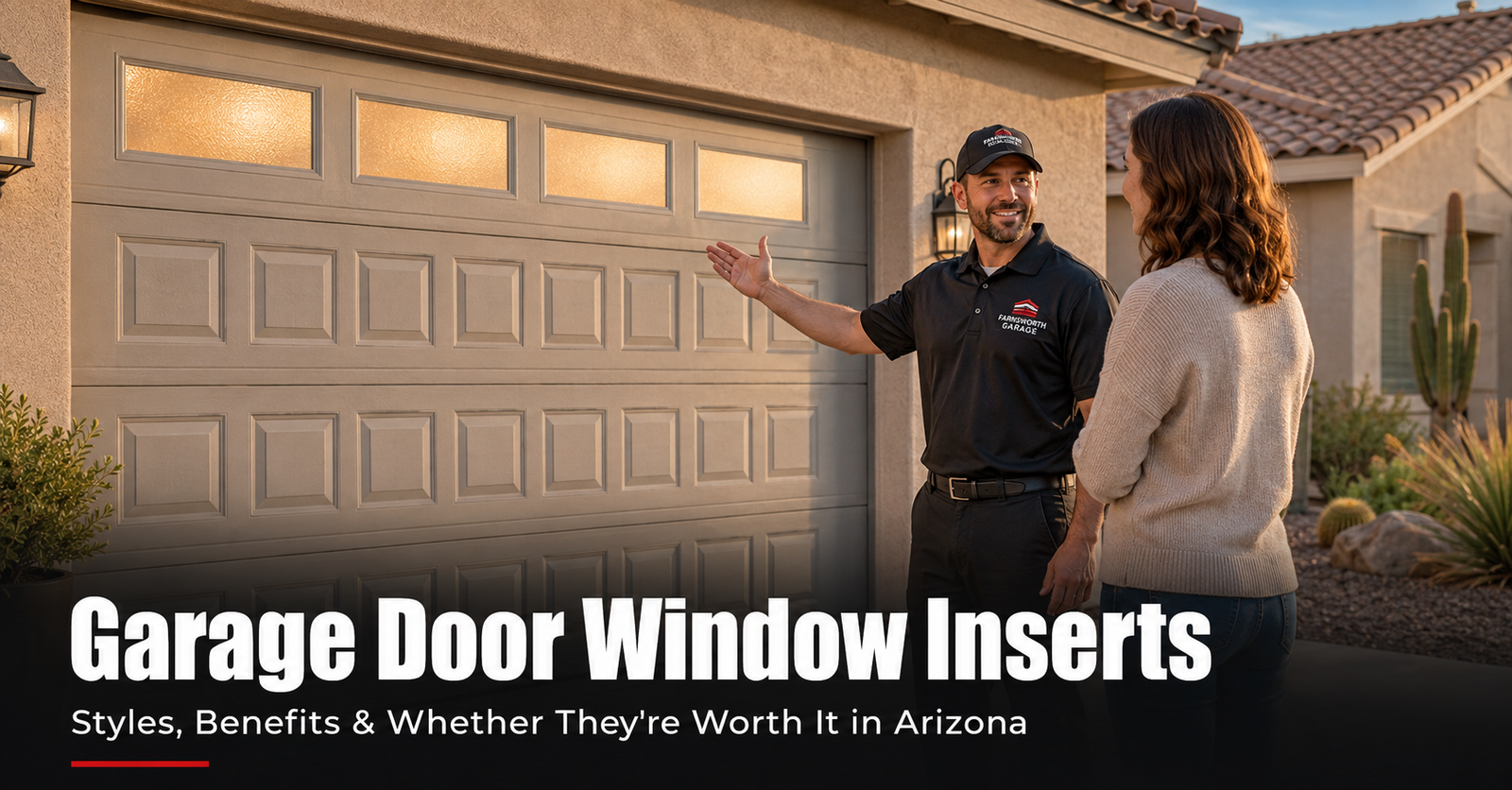
Window inserts are one of the best value-per-dollar upgrades on a garage door — if you make three choices correctly for Arizona:
- Placement: top section only. You get the daylight, keep your privacy, and nobody at the curb sees what's in your garage.
- Glass: insulated (double-pane), tinted, or obscure glass on any attached garage — especially west- and south-facing doors that take the full force of a Phoenix afternoon.
- Timing: windows are cheapest to get right when you're choosing a new door. Retrofitting an existing door is possible, but the panel match and spring re-balance make it a professional job.
Below: every style available, how Arizona sun changes the math, and how to decide whether windows belong on your door.
Walk any newer Queen Creek or Gilbert street at dusk and you'll spot them right away — garage doors with a soft band of light glowing across the top section. Window inserts have quietly become one of the most-requested options on the doors we install across the East Valley, and for good reason: the garage door is the single largest surface on the front of most Arizona homes, and a row of windows changes its whole character for a fraction of what any other facade project costs. But windows on a garage door in this climate involve a few decisions that don't come up in milder places. Here's what we tell our neighbors when they ask.
What Window Inserts Actually Are
A sectional garage door is built from four horizontal panels stacked top to bottom. A "window insert" replaces part of a panel — almost always the top one — with glazed openings. The glass or acrylic sits in a two-piece frame that sandwiches the panel skin, sealed against weather. On most doors, the window section comes from the factory that way; on some, a window kit is cut into a solid section after the fact.
Two pieces make up the look: the glazing (the glass itself — clear, frosted, tinted, seeded) and the design element (snap-in grilles, decorative frames, or nothing at all for a clean modern pane). Because the grilles snap in, many doors let you change the design later without touching the glass — a nice detail if you repaint the house and want the door to keep up.
At the far end of the spectrum sits the full-view door — aluminum frame, glass nearly edge to edge, like Clopay's Avante line you'll see on modern Scottsdale and Gilbert builds. That's a different product with its own tradeoffs, but it's the logical endpoint of the same idea: more light, more design, more glass.
Styles: From Divided-Lite to Full-View
Window style should follow door style. A divided-lite grille looks right on a carriage-house door and wrong on a flush modern panel; a long frameless pane does the opposite. Here's how the main families line up:
| Window style | Looks best on | Glass options | Good to know |
|---|---|---|---|
| Divided-lite (grille) panes | Traditional raised-panel and carriage-house doors | Clear, seeded, rain, frosted | Grilles usually snap in — the design can be changed later without replacing glass. |
| Arched top-row designs | Traditional and Spanish/Tuscan elevations common in older Mesa and Apache Junction neighborhoods | Clear, seeded, frosted | Softens a long horizontal door; pairs well with arched entryways. |
| Plain rectangular panes | Modern flush-panel and plank-style steel doors | Clear, frosted, tinted, insulated | The most popular configuration on East Valley new builds right now. |
| Vertical / stacked side lites | Contemporary doors where the windows run down one side instead of across the top | Frosted, tinted, insulated | Strong designer look; placement matters for privacy since some panes sit at eye level — choose obscure glass. |
| Full-view glass doors | Modern architecture, courtyard garages, golf-course lots | Clear, frosted, tinted, insulated | A whole-door product (e.g., Clopay Avante) rather than an insert — see our styles overview for where it fits. |
Glazing choices matter as much as the pattern. Clear maximizes light and view. Frosted and seeded glass pass nearly as much light while blurring everything behind them. Tinted glass knocks down glare and heat on sun-blasted elevations. Insulated double-pane versions of most of these keep an insulated door performing like one.
The Arizona Factors: Heat, UV, Dust, Privacy
Heat gain is real — and manageable
Glass lets in radiant heat that an insulated steel panel would have stopped. On a north- or east-facing door, that penalty is minor. On a west-facing door in Maricopa or San Tan Valley taking direct sun through the hottest hours of the day, clear single-pane windows can noticeably warm the garage. The fix isn't skipping windows — it's specifying insulated or tinted glass and keeping the glazed area to the top row. If you've already invested in an insulated door (and in Phoenix heat, you generally should), insulated glass keeps the door's R-value story intact.
UV is the quiet killer
Arizona sun doesn't just heat things; it ages them. Budget window kits use thin acrylic glazing that clouds, yellows, and turns brittle after years of UV exposure — we replace a lot of these. Real tempered glass and quality frames cost more up front and look new for decades. If a quote seems surprisingly low, ask whether the glazing is glass or acrylic.
Dust and monsoon sealing
East Valley dust finds every gap, and monsoon season tests every seal. A properly installed window frame is gasketed and weatherproof; an aging one lets fine dust track in around the edges. Window seals are part of what we check on a maintenance visit, alongside the bottom seal and weatherstripping.
Privacy and security
The rule we give every customer: top section, obscure glass, and nobody ever sees inside your garage. Windows placed six-plus feet up can't be looked through from the driveway and can't be reached through toward the emergency release. Frosted or seeded glass adds a second layer. What we talk homeowners out of is full-height clear glass at eye level on a street-facing attached garage — great light, but it puts your vehicles and tools in a display case.
Are They Worth It? When Yes, When No
Windows earn their keep when:
- Your garage is a daytime space. Gym, workshop, laundry, extra fridge — if you're in the garage with the door down, natural light transforms it. No more flipping on lights at noon.
- You're replacing the door anyway. As part of a new door installation, windows are a configuration choice, not a separate project — the most cost-effective way to get them.
- Curb appeal matters to your plans. The door is the biggest single element of your home's face. Real estate agents consistently rank door upgrades among the highest-return exterior projects, and windows are most of why an upgraded door photographs so well.
- The design fits the house. A divided-lite top row on a carriage door, or clean frosted panes on a modern build, looks intentional. That cohesion is what buyers and neighbors actually notice.
Think twice when:
- It's a detached storage garage you enter twice a month. The light benefit barely registers.
- The door faces west with zero shade and you're not willing to pay for insulated or tinted glass. Clear single-pane on that elevation is the one configuration we routinely advise against.
- The existing door is near end of life. Retrofitting windows into a fifteen-year-old door rarely makes sense — put that money toward the replacement door and configure it right.
What determines your specific quote: how many sections get glass, the glazing type (single, insulated, tinted, frosted), tempered glass vs. acrylic, whether it's a factory-configured new door or a retrofit, and panel-match availability for your door model. We put all of it in writing, side by side, so you can compare configurations before deciding — no guessing from a brochure.
Adding Windows to an Existing Door
Yes, it can be done — usually by swapping the solid top section for a factory window section, sometimes by cutting a kit into the existing panel. Whether it should be done depends on two things a technician checks first:
Panel match. The new section has to match your door's brand, model, panel profile, and color — and on a door that's spent years in Arizona sun, even a perfect color match from the factory will read slightly brighter than the faded panels around it. On newer doors this is a non-issue; on older ones it's an honest conversation to have before ordering.
Spring balance. Glass and frames weigh a different amount than the solid panel they replace. Your door's torsion springs are calibrated to the door's exact weight — change the weight and the door is out of balance, which strains the opener and wears hardware early. Re-checking and re-tensioning the springs is part of any window retrofit we do.
Why East Valley Homeowners Call Farnsworth
- Brothers-built and locally owned. Brigham and Riley Farnsworth founded this company, and the Farnsworth name has stood behind East Valley businesses for over sixty years.
- Configuration honesty. We'll tell you when frosted single-pane is plenty and when insulated glass is worth it for your elevation — and quote both in writing so you can see the difference.
- The full system, not just the glass. Window work touches weight, balance, and springs. We handle the whole door, not just the pretty part.
- Same-day service is our standard, often within hours of your call.
- 5.0 stars on Google. Our neighbors keep us busy by telling theirs.
Exploring options? Browse our new garage door options, compare looks in the styles overview, or see where we work across the East Valley.
Frequently Asked Questions
Are garage door window inserts worth it?
For most attached garages on East Valley homes, yes. Windows in the top section bring real daylight into a space that's otherwise dark every hour the door is down, and they're one of the highest-impact curb appeal upgrades you can make to the largest single surface on the front of your house. The value case is strongest when the garage doubles as a workspace, gym, or laundry area, or when you're already replacing the door and the windows ride along as a configuration choice rather than a separate project. They're less compelling on a detached storage garage you rarely enter or a door that takes brutal west-facing sun with no shade — in those cases the heat and fade tradeoffs deserve more weight.
Can I add windows to my existing garage door?
Often, yes — but it's a more involved job than it looks. Window kits are cut into an existing section or the whole top section is swapped for a factory window section. Two things make this a professional job rather than a weekend project: the panel has to be a match for your door's brand, model, and age so the profile and color line up, and the added glass changes the weight of the door, which changes the spring balance. A door that was balanced before windows can become heavy at the top of travel after, straining the opener and wearing parts early. A technician will weigh the door and re-tension or re-size the springs as part of the work.
Do garage door windows make the garage hotter in Arizona?
They can, but glass choice and placement control most of it. Clear single-pane glass on a west-facing door is the worst case — it adds solar gain right at the hottest hours of an Arizona afternoon. Insulated (double-pane) glass, tinted or obscure glass, and keeping windows in the top section all cut the effect substantially. On north- and east-facing doors the heat penalty is small for most homes. If your garage is air-conditioned or shares a wall with living space, ask for insulated glass — it keeps the window option on the table without giving back what an insulated door gains you.
Are garage door windows a security risk?
Placed correctly, no. Standard practice is to put windows only in the top section, six-plus feet off the ground, where nobody can see your belongings at eye level or reach through to the emergency release. Frosted, seeded, or tinted glass adds another layer by letting light in while blurring the view of what's inside. What we recommend against is full-height clear glass at eye level on a street-facing door of an attached garage — that's a window-shopping display of your vehicles and tools. Top-row placement with obscure glass gives you the daylight without the broadcast.
What styles of garage door windows are available?
More than most homeowners expect. The big categories are plain rectangular panes that match modern flush-panel doors, divided-lite designs with snap-in grilles that suit traditional raised-panel and carriage-house doors, arched top-row designs for a softer traditional look, and long vertical or stacked layouts on contemporary doors. Glass options run from clear to frosted, seeded, rain-pattern, and tinted. At the far end of the spectrum are full-view aluminum-and-glass doors like Clopay's Avante line, where the entire door is glass panels — a different product, but the logical endpoint of the same idea.
Should I choose single-pane or insulated glass?
In Arizona, insulated glass is worth asking for on any attached garage, and we'd call it the default for west- and south-facing doors. Single-pane is acceptable on a detached garage, a shaded elevation, or a door where budget is the deciding factor. The reasoning is simple: if you're buying an insulated door for the R-value, clear single-pane windows punch holes in that insulation. Double-pane and tinted options preserve most of what the insulated door buys you. Your installer should quote both so you can see the difference in writing.
Can a broken garage door window be replaced without replacing the panel?
Usually, yes. Most window systems hold the glass in a two-piece frame that sandwiches the panel, so a cracked pane or sun-crazed acrylic insert can be swapped without touching the rest of the section — as long as the frame style is still made for your door model. This is one reason it pays to keep the paperwork from a new door install: knowing the brand, model, and window series makes sourcing an exact-match replacement much faster. If the frame itself has gone brittle from UV, replacing frame and glazing together is the cleaner fix.
Do garage door windows hold up to monsoon storms and dust?
Quality tempered or insulated glass in a properly sealed frame handles East Valley monsoon season fine — wind-driven rain and dust are mostly a sealing question, not a glass-strength question. The weak points we see in the field are aged acrylic inserts that have gone cloudy and brittle after years of UV, and frames whose gaskets have dried out so dust works in around the edges. During a monsoon-season tune-up we check window seals along with the bottom seal and weatherstripping. If hail is your worry, tempered glass is far more resilient than the thin acrylic in budget kits.
Thinking About Windows for Your Garage Door?
Licensed, insured, locally owned. We'll look at your door, your elevation, and your sun exposure, then quote window configurations side by side in writing — so you can pick with real numbers instead of brochure guesses. Same-day service is our standard, often within hours of your call.